
A familiar wallet or bank option does not remove the need for account checks. Before any payment request, a reader still needs to confirm the exact cashier instruction, account-name requirements, written terms, transaction record, and official support route. This guide focuses on those checks and does not promise that any payment method, bonus, or withdrawal result will be available to every account.
Safety and income note: This page is for adults aged 21 and above. Entertainment, rewards, promotions, deposits, and withdrawals are not income promises. Set a limit, read the current rules, and stop when information or eligibility is unclear.
How we reviewed this topic
The approach is evidence-first: verify the exact source, date, account path, and written condition before treating a statement as actionable. Where a rule is not visible or cannot be checked, this guide recommends pausing rather than filling the gap with an assumption.
Check the instruction inside the official account flow
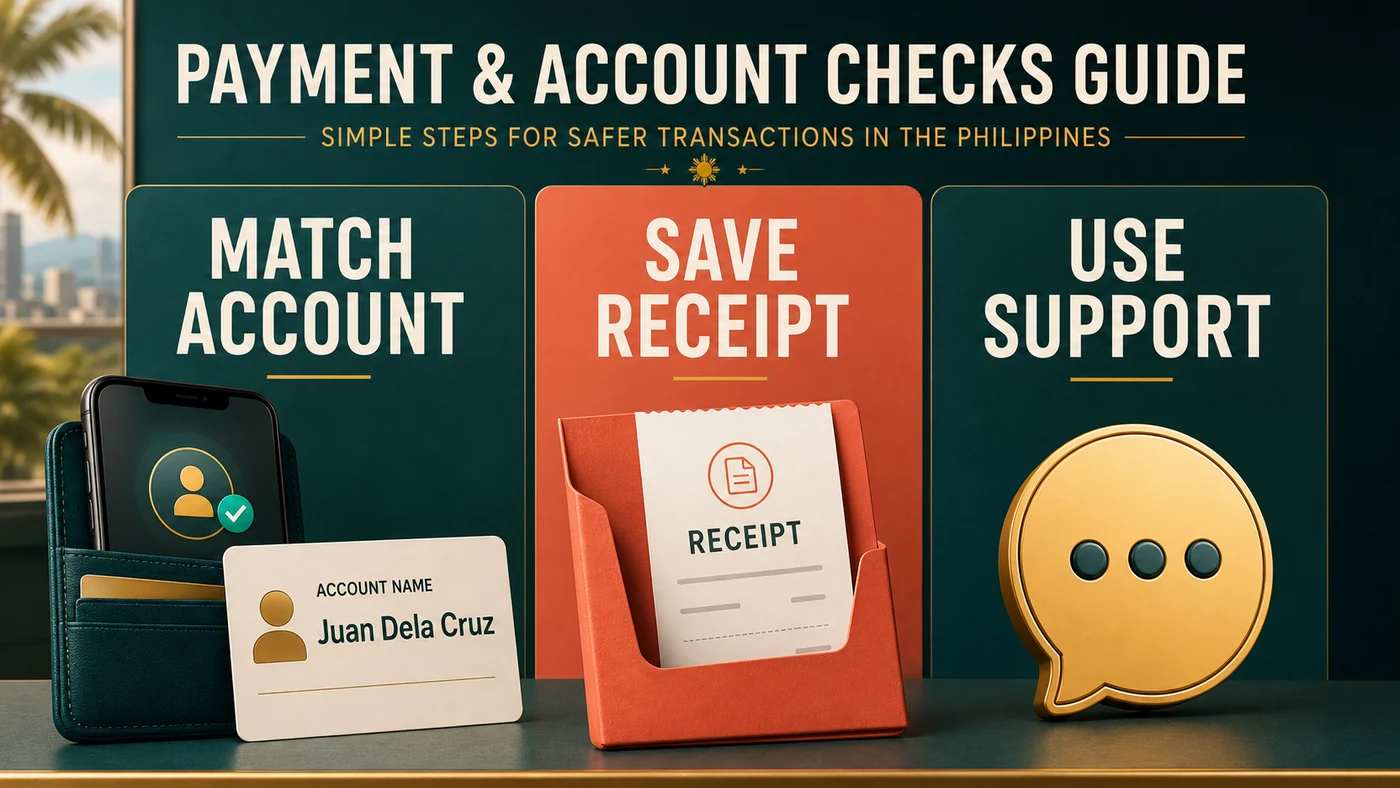
Payment details should be visible in the account cashier or confirmed by an official support route. Pause when an instruction arrives only through social media, a personal account, or a chat message that cannot be tied back to the platform record.
| Payment check | What to verify | Why it matters |
|---|---|---|
| Recipient | The account or wallet instruction appears in the official payment flow. | A familiar payment brand does not prove the recipient is correct. |
| Account name | Whether the wallet or bank name must match the platform account. | A mismatch can trigger review or delay a request. |
| Terms | Limits, fees, bonus impact, and review conditions are written. | The payment amount is only one part of the decision. |
| Support | There is a visible route for a receipt or transaction question. | A reader needs a traceable path if something does not match. |
Keep the record before you need it
Save the transaction ID, amount, date, method, receipt, and the associated support ticket when one exists. Do not post full account details in public chat. A concise record makes it easier to ask a specific question and reduces the chance that a support case becomes a guessing exercise.
| Record item | Example | Use |
|---|---|---|
| Transaction ID | The reference created by the payment provider. | Lets support identify the exact payment. |
| Amount and time | The value and timestamp shown in the receipt. | Helps compare a request with platform history. |
| Account route | The cashier screen or written support instruction. | Shows where the instruction came from. |
| Ticket | A case number or chat transcript from official support. | Keeps later follow-up connected to the first request. |
Understand why a withdrawal can need review
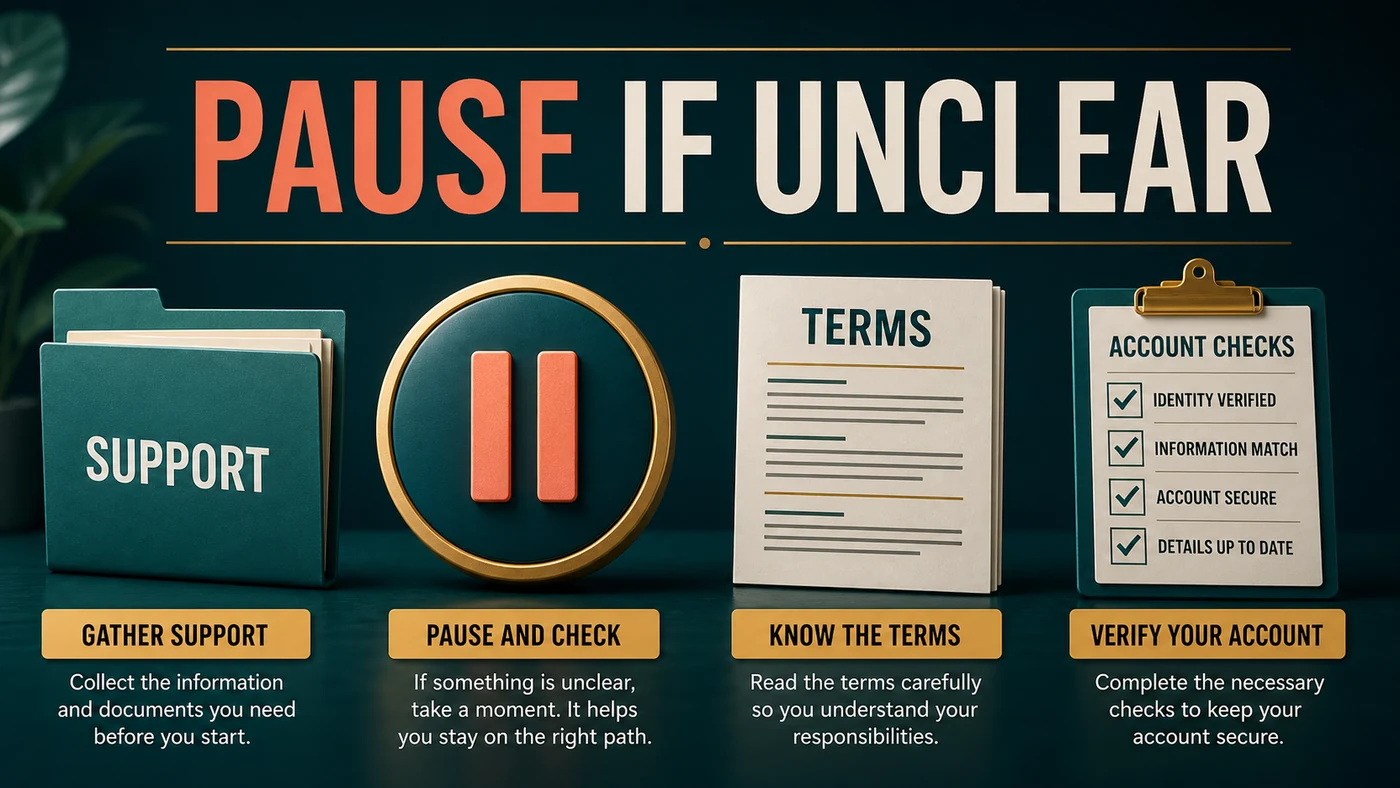
A delay is not automatically a failure, and an approval is not automatic simply because a deposit worked. Current terms, identity checks, account-name matching, active promotion conditions, provider availability, and transaction review can all matter. Read the applicable rules before sending funds and keep the support conversation factual.
| Question | Useful first check | Avoid |
|---|---|---|
| Why is a request pending? | Check current account notices, verification status, and the written transaction rule. | Assuming a public comment explains your account. |
| Can I change the payment method? | Ask whether the account and method must match under current terms. | Sending funds to an unverified alternative address. |
| How do I follow up? | Provide the transaction ID and official support ticket. | Sharing full personal information in public channels. |
A practical review sequence
Start with the smallest reversible action: read the written rule, confirm the exact account or website path, and save the source date. Then decide whether the next action still fits your own limit and check payment instructions, account names, records, and support routes before a deposit or withdrawal request. A reader does not need to prove that every possible problem is absent; the reader needs enough reliable information to avoid acting on a claim that cannot be checked.
- Open the full terms instead of relying on a short headline or repost.
- Check the information in the official account flow or an official source before sending funds or sharing account details.
- Save only the records needed for support, and keep sensitive information out of public chat.
- Pause when a condition is unclear, changes without a written reference, or creates pressure to act immediately.
What this guide does not prove
A checklist can make a decision more careful, but it cannot guarantee availability, approval, a reward, a payment result, or a withdrawal outcome. Those items can depend on current terms, account review, provider status, eligibility, and other conditions that may change. The responsible choice is to verify the current written rule again when the decision involves money, a promotion, or an account issue.
FAQ
Does a familiar e-wallet make every payment instruction safe?
No. Verify the recipient and instruction inside the official account flow. The payment brand alone does not confirm the destination or current platform terms.
Should I deposit before completing account verification?
Read the current verification and withdrawal conditions first. Some checks may be requested later, so it is better to understand the account requirements before sending funds.
What should I include in a support request?
Use the transaction ID, date, amount, method, and a short description. Keep sensitive personal information within the official support process.
Sources
How we reviewed this topic: we used public official references for regulatory and responsible-play context, then limited platform-specific statements to actions a reader can verify in the current account flow. Terms, availability, and account outcomes can change, so this article should be read with the date of the linked source in mind.
- PAGCOR Electronic Gaming Licensing
- PAGCOR Responsible Gaming
- PAGCOR Guarantee announcement
- GCash Help Center: cash-in and cash-out overview