JILI fishing games should be read as cost-per-action arcade casino games, not as skill games with predictable returns. The player may aim, choose targets and adjust weapon strength, but spending speed, feature rules and random outcomes still create risk. The safer approach is to understand the mechanics before play and set a stop point outside the game.
Reviewed 14 August 2026.
Fishing mechanics and what they really mean
| Mechanic | What the player sees | Risk-control interpretation |
|---|---|---|
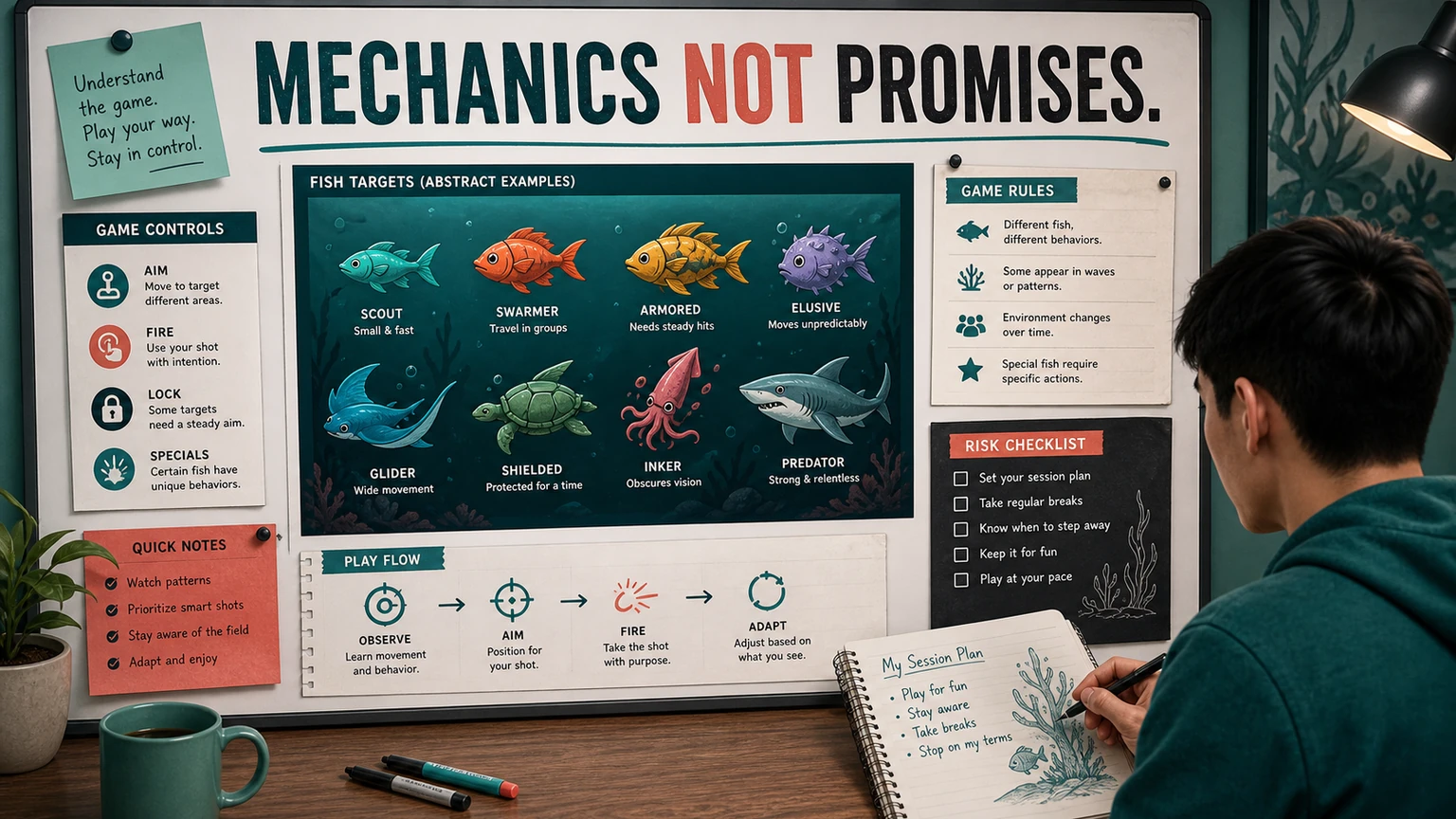
| Weapon or cannon level | Higher firepower or larger shot cost | Spending can accelerate quickly |
| Target size | Small and large targets with different behavior | Bigger-looking targets are not guaranteed value |
| Special feature | Bombs, multipliers, bosses or bonus rounds | Feature names are mechanics, not forecasts |
| Autoplay or rapid fire | Faster repeated actions | Harder to notice session spend |
| Room or table limit | Different bet ranges or entry conditions | Choose only rooms that fit the planned budget |
The main mistake is confusing interaction with control. A fishing game may feel active, but the player still needs strict limits because the pace can be faster than a normal slot session.
Build a budget-first session
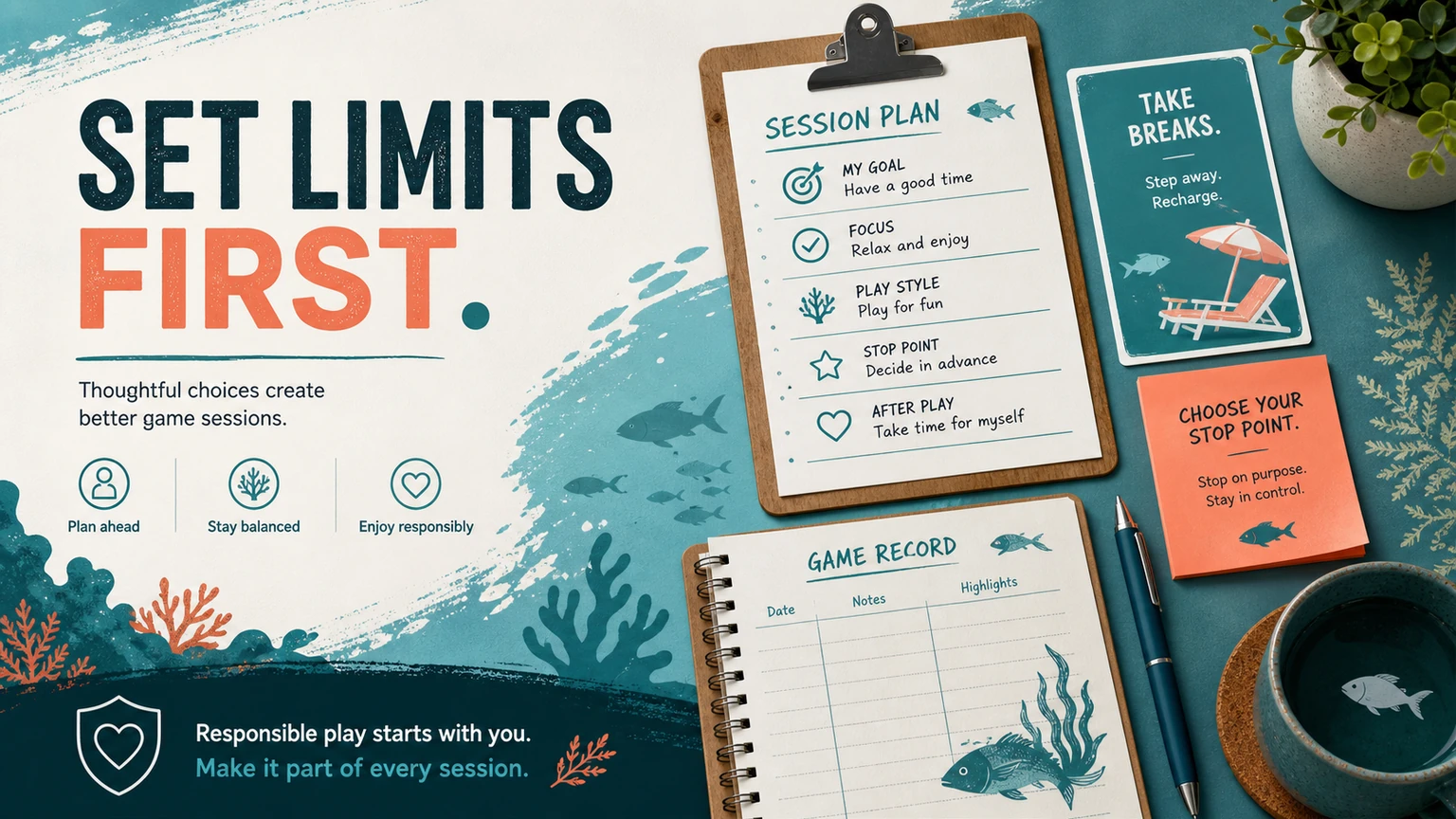
Decide the maximum entertainment cost before opening the game. Split it into small units, choose a room with a low enough entry level and stop when the planned amount or time is reached. Do not increase cannon level because a target looks close or because another player appears to be hitting rewards.
| Decision point | Safer habit | Risky habit |
|---|---|---|
| Room choice | Pick a room below your comfort ceiling | Enter the highest room available |
| Cannon level | Use a small repeatable unit | Raise power after every miss |
| Feature chase | Read feature rules, then ignore emotion | Keep firing because a boss appears |
| After a win | Record and consider stopping | Treat the win as proof of a pattern |
| After a loss | End at the planned limit | Try to recover with faster fire |
Editorial field scenario: why fishing games need a different warning
A player who usually plays slots may move to a fishing game because it looks more interactive. The danger is that every tap or shot feels like a decision, which can make losses feel recoverable by playing harder. The better habit is to treat each shot as a paid action and each level increase as a spending-speed decision.
Provider information is not the same as personal outcome
JILI’s public catalog shows categories and game products, but the exact game rules, bet range, feature availability and promotion contribution must be checked on the platform screen available to your account. If a rule page is missing, the safest decision is to pause rather than guess.
| Check before play | Why it matters | Stop when |
|---|---|---|
| Rules page | Explains symbols, targets or feature names | Rules are missing or unreadable |
| Bet or shot cost | Shows how fast the budget can move | Minimum cost is above your plan |
| Promotion terms | May exclude fishing or count it differently | Contribution is unclear |
| Support route | Needed if balance or feature display is disputed | Only unofficial chat answers are offered |
Reader decision framework: classify the session before opening the game
Choose one session type: entertainment, rules-learning or promotion check. An entertainment session uses a small fixed limit and no chasing. A rules-learning session focuses on one room, one cannon level and one rules page. A promotion-check session begins only after game contribution, expiry and withdrawal terms are known. Mixing these goals makes fishing games harder to control because every target starts to feel like a reason to continue.
A common reader mistake is to move from a slot article into fishing games and assume the same bankroll rhythm applies. Fishing games can spend faster because the player controls repeated shots. That is why the first decision is not which target to hit; it is how quickly the session is allowed to spend.
FAQ
Are fishing games mostly skill?
No. Aiming and target choice are visible actions, but they do not guarantee outcomes. Budget and stop rules remain the main protection.
Should I raise cannon level after several misses?
No. Raising cost after misses is a chasing pattern. Use the level you planned before the session started.
Safety and income note: Keep personal documents, addresses, payment details, private messages and identifying background information out of public streams, chats and account screenshots. For gaming or casino-related activity, set a budget before you start, treat losses as entertainment cost, do not borrow to continue, and stop when a session affects sleep, work, family or finances. If streaming, events, gifts, bonuses or promotions produce compensation, keep dated records and ask a qualified professional about tax treatment.
How we reviewed this topic
We separated public product or platform information from promotional language, then converted each claim into a reader check that can be repeated from the current account screen, official help page or written terms. Eligibility, game availability, rewards, account tools, withdrawal conditions, support routes and app features can change by account, device, location and current terms.
Editorial limit: We did not verify private account eligibility, unpublished campaign rules, individual payout results, personal support messages or hidden platform dashboards. Treat this guide as a decision framework and confirm current in-app terms before spending, streaming or sharing personal data.
Sources
- JILI Games official catalog
- PAGCOR responsible gaming guidance
- PAGCOR Responsible Gaming Code of Practice